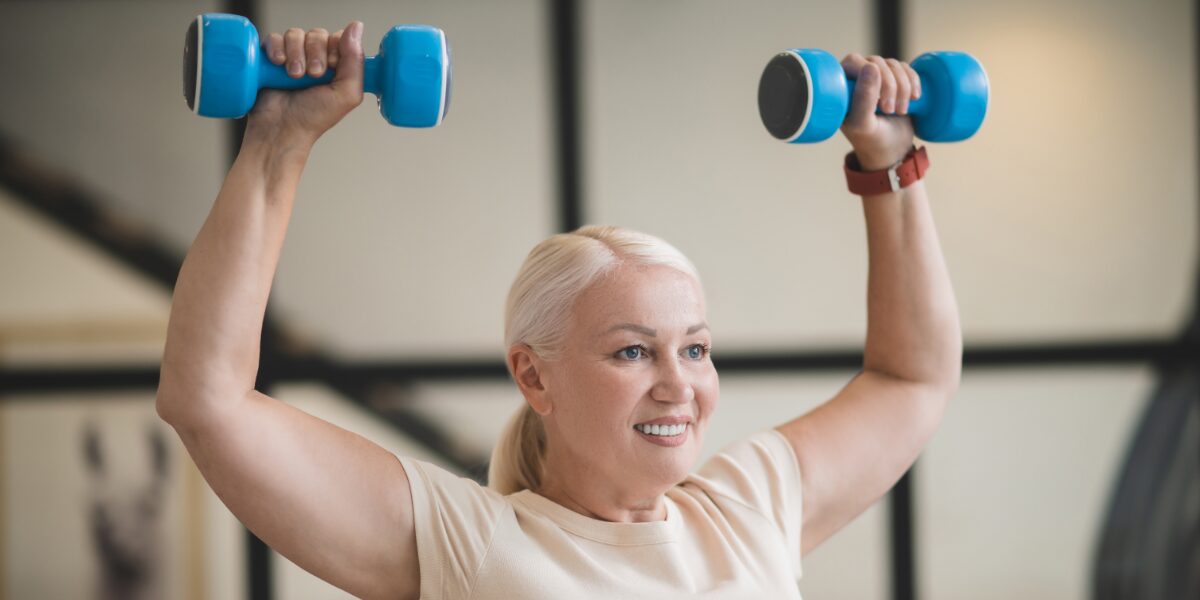
Many women assume that strength naturally declines after menopause and that physical limitations become unavoidable with age. While hormonal changes can affect muscle mass, recovery, joint health, and performance, menopause does not signal the end of athletic progress. In many cases, it creates an opportunity to approach fitness with greater intention and focus.
One of the most valuable lessons for active women is that long-term strength is often built by returning to the fundamentals. When pain, injury, or movement limitations develop, the solution is not always to train harder. Instead, it may require stepping back, improving movement quality, and rebuilding strength from the ground up.
A powerful example comes from an athlete who struggled with severe shoulder pain that made strict push-ups and overhead squats impossible. Rather than abandoning these movements altogether, the focus shifted to pain-free range of motion, proper mechanics, and gradual progression. The result was not only a return to previous abilities but ultimately greater strength and performance after age 50 and beyond menopause.
This experience highlights an important truth: sometimes the fastest path to progress begins with mastering the basics.
Why Strength Training Changes After Menopause
Menopause affects the body in several ways that influence exercise performance. Declining estrogen levels can contribute to reduced muscle mass, slower recovery, changes in connective tissue health, and increased joint discomfort.
These changes do not prevent women from building strength. However, they do make training quality more important than ever.
Successful strength programs after menopause often emphasize:
- Proper movement mechanics
- Progressive overload
- Joint-friendly exercise selection
- Recovery and mobility work
- Consistent resistance training
Rather than focusing solely on heavier weights, women benefit from developing strength through controlled, efficient movement patterns.
The Importance of Pain-Free Range of Motion
Range of motion, commonly referred to as ROM, describes how far a joint can move through a particular movement pattern. In resistance training, ROM influences strength development, muscle growth, joint function, and overall movement quality.
When pain is present, attempting to force movement beyond a comfortable range can create compensation patterns that increase stress on surrounding tissues.
Instead, identifying a pain-free ROM allows individuals to continue training while protecting the affected area.
For example, someone experiencing shoulder discomfort during push-ups may benefit from:
- Performing push-ups against a wall
- Using an elevated bench or box
- Reducing movement depth temporarily
- Focusing on controlled repetitions
Working within a pain-free range creates an environment where strength can develop without aggravating symptoms.
Why Full Range of Motion Supports Better Results
Although pain-free movement is the priority, the ultimate goal is often to gradually restore full range of motion whenever possible.
Research published in the Scandinavian Journal of Medicine & Science in Sports found that full-range resistance training generally produces greater improvements in both strength and muscle growth compared to partial-range training.
Full ROM training offers several advantages:
- Greater muscle activation
- Improved joint mobility
- Better functional strength
- Enhanced movement efficiency
- Improved performance in daily activities
Activities such as climbing stairs, standing from a chair, lifting objects overhead, and maintaining balance all depend on the body’s ability to move effectively through full ranges of motion.
While partial ROM training has value in specific situations, full ROM remains the preferred foundation for most active adults.
Leaving Ego Out of the Training Process
One of the greatest obstacles to recovery and long-term progress is the desire to perform at previous levels before the body is ready.
Many active and athletic women find it difficult to modify exercises they once performed with ease. However, pushing through pain often delays improvement rather than accelerating it.
Returning to basic movement patterns allows the body to rebuild strength in a controlled manner.
This process often involves:
- Using lighter resistance
- Practicing movement mechanics
- Reducing exercise complexity
- Prioritizing consistency over intensity
Progress may appear slower initially, but it creates a stronger foundation for future performance.
The Value of the Hand-Release Push-Up
The hand-release push-up is an excellent example of how a foundational exercise can improve strength throughout an entire movement pattern.
Unlike a traditional push-up, the hand-release variation requires the chest to fully contact the floor before briefly lifting the hands and pressing back to a plank position.
This movement eliminates momentum and develops strength from the most challenging portion of the exercise.
Benefits of the hand-release push-up include:
- Improved upper-body strength
- Better core stability
- Increased shoulder control
- Greater consistency in movement depth
- Enhanced strength through the full range of motion
For women who have already established pain-free shoulder movement, this exercise can be an effective progression toward stronger, more controlled push-ups.
Mobility and Recovery Are Essential Components of Strength
Strength training extends beyond the workout itself. Recovery and mobility play critical roles in maintaining healthy movement patterns and reducing injury risk.
After menopause, mobility work becomes especially important because joint stiffness and movement restrictions may become more noticeable.
Effective recovery strategies often include:
- Dynamic warm-ups
- Shoulder mobility exercises
- Rotator cuff strengthening
- Hip and ankle mobility work
- Adequate sleep
- Proper nutrition
- Stress management
Consistent mobility practice helps support a full range of motion while preparing the body for future training sessions.
Building Stronger Shoulders Through Consistency
The remarkable outcome of returning to basics is that many women ultimately become stronger than they were before their setbacks.
When training emphasizes pain-free movement, proper mechanics, shoulder stability, and gradual progression, the body develops resilience that supports long-term performance.
In the example of the athlete who rebuilt shoulder strength through this approach, the result was the ability to complete 100 strict push-ups in a workout and achieve a bench press personal best after age 50 and beyond menopause.
These results were not achieved through shortcuts or aggressive training methods. They were earned through consistency, patience, and commitment to the fundamentals.
Menopause does not mark the end of strength development. In fact, it can be an ideal time to focus on the training principles that create lasting results. Pain-free range of motion, proper mechanics, mobility work, and progressive strength training provide the foundation for building durable, functional strength at any age. By prioritizing movement quality over ego and consistency over intensity, women can continue achieving impressive fitness goals long after menopause. For personalized guidance designed specifically for active and high-performing women, Dr. Carla DiGirolamo offers expert support in women’s performance endocrinology to help optimize strength, health, and performance through every stage of life.